

Fire Hazards is one of the most dangerous industrial risk in oil and gas industry, With highly flammable substances such as crude oil, natural gas, and volatile chemicals, even a minor spark can result in fires or explosions. So, this is why having better understanding of top 5 fire fighting equipment to maintaining workplace safety and hazards free operation.
In this article, we will provide you with information of top 5 fire fighting equipment for high risk environment, and why each equipment is essential.
Why Fire Fighting Equipment is Critical in Oil and Gas Industry
Oil and gas industries operate under extreme high risk conditions, presence of combust able material, also including high pressure, high temperature. Fire in such environment spread rapidly and difficult to controll without specialized equipment or system.
Benefits of Implementing fire fighting equipment :
- Immedaite fire detection and response
- Workers safety and Protection of infrastructure
- Compliance with international/local safety regulations
- Reduced downtime and financial loss
1: Fire Extinguishers
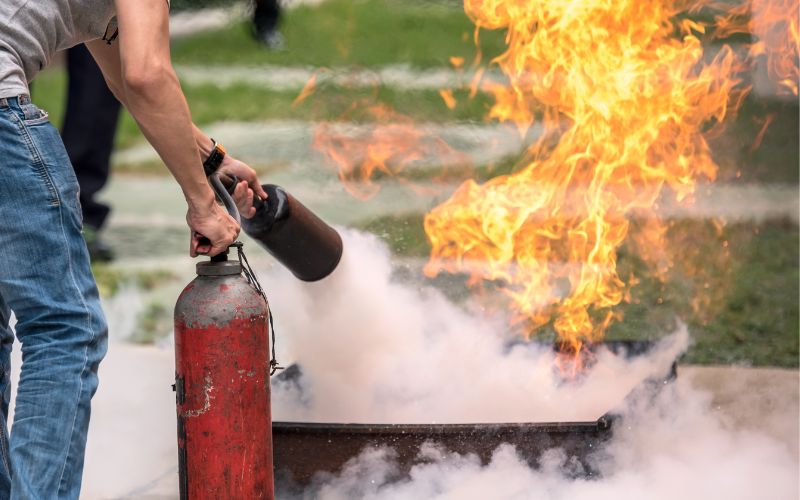
Fire extinguishers are the first most accessible, and immediate response tools and widely use in oil and gas industry. To ensure effective use of fire extinguisher every worker has to take the training for the use of fire extinguisher.
Common Types Used:
- Dry Chemical Powder (DCP) – Effective for Class A, B, D fires
- Foam extinguishers- Highly effective for fuel fires.
- Carbon Dioxide (CO₂) extinguishers – Co2 for only Electric fires
How to use a fire Extinguisher
Use PASS Method:
P: Pull the Pin
This will allow you to squeeze the handle in order to discharge the extinguisher
A: Aim on the base of fire
The agent will pass through the flames
S: Squeeze the Handle
This will release the pressurized extinguishing agent.
S: Sweep side to side
Cover the entries area that is on fire. Continue until fire is extinguished. Keep an eye on the area for re-lighting.
Why They Matter:
They allow workers to quickly control small fires before they escalate into major incidents.
2:Fire Hydrant System
Fire hydrant system is effective to control high volume fire and this is backbone of fire fighting equipment in oil and gas industry or workplace with higher fire risk such as big buildings, hospital and ware houses.
Key Features:
- Continuous water supply
- High-pressure pumping systems
- Hose reels and hydrant valves
Industrial Use:
Hydrant systems are widely used in refineries, tank farms, and processing plants to control large fires and cool nearby equipment.
Importance:
A fire hydrant is a connection point by which firefighters can hit into a water supply.They prevent fire spread and protect critical assets during emergencies.
3. Foam Fire Suppression System
Foam systems are one of the most important elements in the top 5 fire fighting equipment for oil and gas industry.
How It Works:
This is best for hydrocarbon fires, Foam creates a layer over flammable liquids, blocking oxygen and suppressing vapors.
Places Where Used:
- Storage tanks
- Loading terminals
- Offshore drilling platforms
Why It’s Essential:
Unlike water, foam is specifically designed for hydrocarbon fires, making it highly effective in oil and gas environments.
4. Fire Detection and Alarm Systems
Early detection is crucial, making fire detection systems a key part of the fire fighting equipment.
Types of Systems:
- Flame detectors
- Smoke detectors – Detect smoke particles, two main types are Ionizing and Optical, due to its sensitivity it can rise false alarm.
- Heat sensors – Detect excess heat generated by fire, two main types are rate of rise and fixed temperature, it may not detect fire which giving off smoke but bot much heat.
- Gas leak detectors – These are fix or portable devices which helps in detecting the flammable or toxic gases.
Benefits:
- Immediate alerts
- Faster emergency response
- Integration with shutdown systems
Real Impact:
These systems can prevent disasters by identifying hazards before they escalate.
5. Fixed Fire Suppression Systems –
Fixed suppression systems is automatics fire protection system which extinguish fire automatically when detect and it complete the top 5 fire fighting equipment for oil and gas industry.
Types Include:
- Deluge systems
- Water spray systems
- Gas suppression systems (CO₂, FM-200)
Where They Work Best:
- Control rooms
- Electrical substations
- Engine compartments
Why They Are Critical:
They activate automatically, ensuring fire control even if no personnel are present.
Maintenance and Training
Even the fire fighting equipment can fail without proper training and maintenance, so these system required a periodic system to ensure the effectiveness of system.
Best Practices:
- Routine inspections
- Fire drills and employee training
- Equipment testing and calibration
- Emergency response planning
Conclusion
Fire safety in oil and gas industry is required more than basic precautions, it require advance planning and right equipment for fire protection with emergency evacuation procedure and emergency plans.
From portable extinguishers to automated suppression systems, each plays a vital role in preventing and controlling fires. Combined with training and maintenance, these systems form a strong defense against one of the industry’s biggest risks.