

Safe System of Work
A safe system of work is a structured, developed procedure to carry out tasks safely after identifying hazards and assessing risks. Its key elements include and implementation of control measures. As a Permit to Work System (PTW) is part of SSW, it is especially important in high-risk industries such as the oil and gas sector, specifically where safety is not just a priority, but a necessity. In this article, we’ll explore what a Permit to Work system is, why it is important, its types, and how it contributes to a safer working environment.
What is a Permit to Work System?
A Permit to Work System (PTW) is a formal written procedure that identifies and records the hazards associated with equipment, systems, processes, work, and work areas. A permit-to-work system keeps everyone aware and clearly authorise work, with a full understanding of personnel roles and responsibilities throughout the PTW life cycle.
This also acts as a communication tool between the Supervisor, Safety Officers, Workers, and issuing authorities such as the area/asset owner. It clearly outlines:
- The work to be done
- The associated risks
- The safety measures required
- Authorization from responsible personnel
Without a PTW system, critical safety steps can be missed, increasing the risk of accidents, injuries, or even fatalities.

Why is a Permit to Work System Important?
To achieve a safe working environment by providing management and administrative control over activities that may involve essential hazardous work, especially in industry dealings with flammable materials, process areas such as plants, wellheads, or drilling sites, construction sites with heavy machinery, and confined spaces.
1. Risk Control
The system ensures that all hazards are identified and controlled before work begins. This significantly reduces the chances of incidents.
2. Clear Communication
It provides clear instructions to everyone involved, minimising misunderstandings between departments or teams.
3. Legal Compliance
All international safety standards and regulations require a PTW system. Implementing it helps organizations stay compliant and avoid penalties.
4. Accountability
Each permit includes signatures and approvals, ensuring clear assignment of responsibility.
5. Accident Prevention
By following a structured process, organizations can prevent major accidents such as fires, explosions, or toxic exposures.
Types of Permit to Work Systems
Different types of permits are used depending on the nature of the work. Below are the most common types:
1. Hot Work Permit
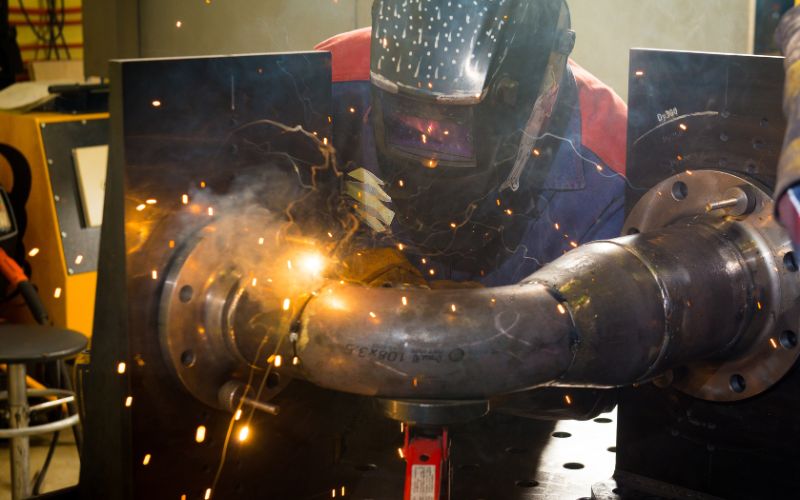
Hot work, which produces sparks and carries a high risk of fire, requires a hot work permit; most hot work permits are red.
Example:
- Welding, cutting, open flames, Burning
- Use of spark producing tools, grinder, drill machines, Power hammer
- Non-explosion proof equipment such as photography.
- Hot Tapping, Non-destructive testing (NDT).
2. Cold Work Permit or General Work Permit
Cold work includes tasks or work in a classified area or plant/well head that do not produce heat or sparks but may still be hazardous.
Example:
- Opening or disconnecting of and Isolated or closed pipeline or Vessel.
- Hydrostatic pressure testing.
- Flange opening.
- Scaffolding erecting or dismantling
- Civil Work(If no power tool need to be used)
- Painting.
- General Housekeeping in Classified area.
3. Confined Space Entry Permit
A confined space is a space where a person can bodily enter, with limited means of entry and exit, and not designed for human occupancy. A confined space entry permit is required when workers need to enter enclosed or restricted spaces, such as tanks, vessels, silos, or pits deeper than 1.2 meters.
Note: One permit covers only one confined space, as stated on the permit. This permit is only for entry; a separate permit-to-work system is required to work in a confined space.
Example:
- Doing a manual cleaning job in a vessel need and entry permit plus a cold work permit for the task or job.
- Gas cutting for removal of tray from vessel needs a hot work permit.
Confined space is very high risk in oil and gas sector, there is complete procedure to control the hazards and associated risk, its required a several safety procedure and method of work system.
4. Electrical Work Permit
This permit to work system applies to any work involving electrical systems, especially high-voltage equipment.
Example:
- Repairing electrical panels in a classified area
- Installation of an electric distributor from the electric/generator room to the work site
5. Lifting Permit
Lifting operations involving shifting heavy loads from one place to another, or loading or unloading material using a crane, boom truck, forklift, or other powered lifting equipment, require a separate lifting permit.
Example:
- Removing heavy equipment from the location and loading it onto a trailer.
- Offloading scaffolding material from a truck by using a forklift
Key Section of Permit to work System.
An effective permit-to-work system has several critical sections. Each section has different attributes and importance, which help make the full system effective. However, companies vary in how they structure their systems. We will discuss the sections that most organizations follow.
Section A:
- Dates, Area and Unit Details.
- Equipment Number & details
- Job Description to be performed
- Tools and Equipment to be used
Section B:
This section is very important and needs to be filled very carefully by a competent permit receiver and checked by the permit issuer at the time of issue to ensure that no hazards and their controls are missed
- Hazards Identification (All checks related to the above job description)
- Identification of Required Precautions (Include supporting Documents & permit)
- Equipment or Area Preparation (Barricading Tags, Fire Extinguisher Availability)
- Personal Protective Equipment (selection on the basis of job scope)
- Communication tools are going to be used
Section C:
- Initial Gas testing for hot work in classified areas or during live plant operations for all types of activity.
- The authorized gas tester does Initial Gas testing before the start and issuance of the activity
Section D
This section is for issuing authority:
- Issuance, Acceptance, Authorization
- Permit issuer details, and signature
Section E:
- Permit close out
- Work status
- Complete/Incomplete
Section F:
This section is for periodic gas test records on site during the activity. After the period ends, the authorized gas tester repeats the gas test and records the results on the permit in this section.
Section G.
- Extension of permit(normally for next shift if work is not ended in the present shift)
- Revalidation if any person changes in authority or work stops due to any emergency
- Also final remarks and closed out of permit for record
Common Mistakes to Avoid
Even with a PTW system in place, mistakes can occur. Avoid these common errors:
- Issuing permits without proper hazard identification
- Poor communication between departments
- Ignoring permit validity periods
- Lack of supervision during work
- Incomplete permit closure
Addressing these issues can significantly improve workplace safety.
Conclusion:
The permit-to-work system is a vital component of workplace safety. It provides a structured approach to managing hazardous tasks, ensuring that risks are controlled and work is carried out safely.
The Permit-to-Work System is effective when both the permit-taking and issuing authorities share equal concern for hazard identification and control to reduce overall risk. This helps protect workers, enhance productivity, and maintain compliance with safety regulations.
About the author
Adil Ahmed — HSE Officer. 4+ years across oil and gas EPC projects, drilling rig operations, refinery operations, brownfield tank farm expansion and shutdown/turnaround (TAR) work in the Middle East and South Asia, covering permit to work, JSA/JHA, risk assessment, confined space entry, lifting operations and hot work.
Qualifications: NEBOSH International General Certificate in Occupational Health and Safety · IOSH Managing Safely
See project experience → · Follow SafetyOG on LinkedIn
General guidance only. Standards and requirements vary by company, country and permit system — always follow your own site’s approved procedure.
Pingback: Top 5 Industry Hazards: Types, Examples and Prevention Tips
Pingback: Oil and Gas Interview Questions and Answers: HSE Officer - Safety OG
Pingback: Safety Officer Interview Questions and Answers – Part 2 - Safety OG