
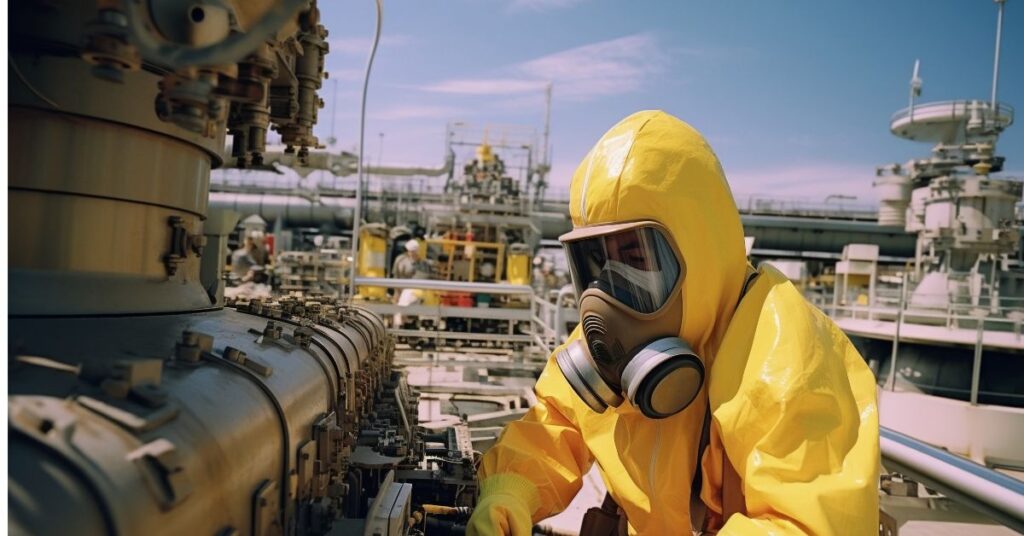
Introduction:
This guide is designed in a simple, practical, and easy-to-understand way, helping beginners and professionals to build a strong foundation in basic occupational safety.
For those new to the oil and gas industry, understanding basic occupational safety is essential. Safety slogans show the importance of BOSH and the Safety First policy.

What is Basic Occupational Safety?
Basic occupational safety is a fundamental set of policies, procedures, and practices developed to protect workers’ health, safety, and well-beingin the workplace. In the oil and gas industry, work can be more dangerous because of flammable materials, high-pressure systems, hazardous chemicals, and other unsafe conditions, which require critical safety measures.
Occupational safety is the safe working practice (SWP) followed to ensure a safe and healthy working environment. Hazard identification and risk control are good tools for implementing occupational safety.
- Prevents fires and explosions
- Chemical handling and exposure
- Safe equipments operation
What is HSE?
HSE prevents people from being harmed at work or becoming ill, provides a safe working environment, and ensures workers follow procedures and policies.
Health
Health is a state in which an individual feels free of diseases, with physical, mental, and social well-being.
Safety
Safety is freedom from those conditions that can cause harm to an individual, the absence of uncontrolled hazards and significant risk.
Environment
Environmental protection is a structured approach to prevent harm to the environment, water, land, natural resources, and underground resources. It reflects the interrelationship between humans and the environment.
The 5 Basic Elements of HSE Management System
These five elements are the foundation of an effective HSE management system.
- Safety Policy
- Safety Procedures
- Hazard Identification
- Risk Assessment
- Incident Reporting & Investigation
Safety Policy:
Safety policy, a structured document, defines the company’s commitment to safety. It includes a Health commitment, a Safety commitment, legal compliance, defined roles and responsibilities, and a commitment to continuous improvement.
Safety Procedure:
Turning safety policy into action. Safety procedures explain or guide how to perform a task safely. These are structured instructions (standard maintenance procedures). These procedures are developed under strict HSE policy to ensure compliance with regulations such as OSHA and IOSH. Safety procedures prioritize worker safety through hazard identification and reduce overall risk.
Common procedure for the oil and gas industry
- Hot Work(Welding/Cutting)
- Isolation(Lockout/tag out)
- Confined Space entry
- Lifting procedure
- Working at height
Real time Example
Working at height is a critical activity performed rapidly in industry. It requires an effective safety procedure that includes worker safety, provision of a safe platform, fall protection, and appropriate PPE. Procedures may also ensure administrative control and that an emergency rescue plan is in place.
Hazard Identification in the Oil & Gas Industry
Hazards:
A hazard is anything with the potential to cause loss or harm, such as injury to people, property damage, or environmental harm.
Types of Hazards
There are 5 main types of hazards in the oil and gas industry. We have briefly discussed the Top 5 Industry Hazards. Read them for a better understanding.
Risk Assessment:
This is one of the essential safety tools. Risk assessment plays an important role in improving basic occupational safety.
Risk:
A combination of the likelihood of harm and the severity of that harm. This harm could damage people’s health and property.
Risk = Likelihood X Severity
Risk Assessment
A risk assessment is a careful examination of the workplace to identify conditions that can cause harm to people. This helps employees determine whether sufficient precautions have been taken or whether more are needed to prevent harm.
Five step of Risk Assessment:
- Identify the Hazards
- Decide who might be harmed and how
- Evaluate the risks and decide on precautions
- Record findings and implement them
- Review your assessment and update if necessary
Real time example
In the Gas purification plant’s storage tank area, maintenance activities such as cleaning and mechanical jobs are planned from time to time. This requires careful hazard identification and assessment of the consequences, and deciding on available and additional control measures to reduce the overall risk associated with maintenance activities.
Job example
- Tank Cleaning
- Hazards: Toxic gases, Paraffin material
- Risk Level high
Control
- Isolation
- Gas Testing
- Ventilation
- Permit to Work System
- Disposal of Paraffin material
A careful risk assessment and the above-mentioned control can reduce the risk matrix from high to low.
Occupational Incident:
An incident is an unwanted and unplanned event that may or may not result in loss or injury to persons, damage to property, or damage to the environment. An incident further has 2 types:
Near Miss
A near miss is an unwanted or unplanned event that has the potential to harm but no loss in result. This is still a reportable incident.
Example: An employee tripped over a cable and fell but didn’t suffer any injury or harm.
Accident
An unwanted or unplanned event that results in loss or harm, such as injury to people or damage to equipment. This is a reportable and investigable incident.
Example: An employee tripped over a cable and fell, breaking his leg.
Common causes of an accident
- Lack of information/training
- Un-Safe Act
- Un-Safe condition

Cost of Accident
Any unwanted accident harms a company’s reputation and the person who suffers. Some costs are insured, while others are not.
Insured Cost
- Fire
- Work Injury
- Death
- Medical Cost
Uninsured Costs
- Legal Cost
- Production delays
- Investigation time
- Loss of company reputation
Incident Reporting and Investigation
Incident reporting and investigation are parts of the safety management system. They help identify the immediate and root causes of an incident and prevent future incidents. This procedure has various components. Here is just an overview of incident reporting and investigation included in basic occupational health and safety. A detailed article will also be published later.
After an incident occurs:
- Secure the Scene to prevent further harm.
- Collection of information, photos, and physical evidence
- Witness statements to find the immediate cause
- Root cause analysis using the RCA method
- Deciding on corrective and preventive actions
- Report with associated documents
- Share lessons learned with all employees
What’s New in Basic Occupational Safety in 2026
Modern safety practices are evolving rapidly. In 2026, the oil & gas industry is adopting advanced technologies:
Key Trends:
- Digital Permit to Work (PTW) Systems
- AI-Based Hazard Detection
- Smart PPE (helmets with sensors)
- Real-Time Gas Monitoring Systems
- Predictive Maintenance using IoT
Conclusion
Basic occupational safety is essential for safe operations in the oil & gas industry. From understanding hazards to implementing risk controls, every step plays a critical role in preventing accidents.
In 2026, safety is not just about compliance—it is about creating a proactive culture supported by technology, training, and responsibility at every level.
About the author
Adil Ahmed — HSE Officer. 4+ years across oil and gas EPC projects, drilling rig operations, refinery operations, brownfield tank farm expansion and shutdown/turnaround (TAR) work in the Middle East and South Asia, covering permit to work, JSA/JHA, risk assessment, confined space entry, lifting operations and hot work.
Qualifications: NEBOSH International General Certificate in Occupational Health and Safety · IOSH Managing Safely
See project experience → · Follow SafetyOG on LinkedIn
General guidance only. Standards and requirements vary by company, country and permit system — always follow your own site’s approved procedure.
Pingback: Fire Watcher and Hole Watcher Responsibilities - 40 Interview Clearing Q&A - Safety OG