
Introduction:
When it comes to workplace safety, three risks top the list: hand injuries, line-of-fire, and dropped objects. Most incidents happen during normal routine work activities. Workers often become overconfident in their jobs and start to forget about hand safety, the line of fire, and the risk of dropping objects. And these hazards aren’t limited to the oil and gas industry — they show up in our daily lives too.
In this article, we will discuss the meaning of hand safety, line of fire, and dropped objects, along with practical site examples and effective control measures commonly used in the industry. After reading this article, workers and supervisors will be able to understand these hazards properly instead of treating them as normal site conditions.
Hand Safety
Hand safety means protecting hands and fingers from injuries during work activities. Your hands are the most vulnerable because they’re the most valuable. On-site, you use them for nearly every task.
Common hand injuries include:
- Finger cuts
- Crush injuries
- Burns
- Abrasions
- Fractures
Put your hands in the wrong spot, or miss a hazard before you start, and that’s when injuries happen.
Line of Fire
Line of fire is a situation where a person or worker places themselves in the direct path of hazards. In simple terms, if something starts moving unexpectedly and a worker is standing in its path, that worker is in the line of fire.
What makes line-of-fire so deadly? It happens in an instant, with zero time to move, flinch, or react.
A common example of a line of fire
- Vehicles
- Doors
- Pressurised system
- Rotating Equipment
Dropped Objects
Materials, tools, or equipment that fall or can fall from height are called dropped objects. Dropped objects are a major hazard in plant, rig, and scaffolding areas at construction sites. Even a small falling object can cause serious injury or property damage because force increases with height.
A common example of dropped objects
- Stones or unwanted material
- Bolts and clamps
- Hands tools
Potential examples of hand-safety, line-of-fire, and dropped-object hazards in the workplace.
Pinch point
These injuries happen when hands or fingers get trapped between two moving objects or between fixed and moving equipment.
At the workplace:
- Closing and opening valves
- Rotating equipment
- Handling heavy loads or material
Controls and safe practices in oil and gas
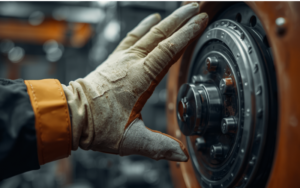
Always keep your hands away from moving parts and use safe hand positioning while opening or closing valves or using hand tools. Always use proper PPE and the right tool for the right job:
- Gloves / Impact gloves/cut-resistant gloves
- Finger saver tool to hold the bolts
Handling Power Tools
Power tools are widely used in oil and gas maintenance, such as grinding machines, impact wrenches, drills, and cutting tools. These tools can create serious hand injuries if used incorrectly.
Power tools create unsafe conditions, including:
- Damaged tools
- Missing guards
- Loose or damaged cables
Controls and Safe practice in oil and gas
Always inspect tools before every use. Company inspection stickers must be applied and be valid. Workers or trained personnel must be authorized to use power tools with a valid training card.
Rigging and Lifting Activities
During lifting operations, workers sometimes stand under suspended loads or too close to the lifting path, exposing themselves to the line of fire. If rigging fails or the load swings unexpectedly, serious injuries can occur.
Rigging and lifting are high-risk activities, and the hazards associated are:
- Swinging load
- Failure of lifting gears and equipment
- Suspended load
- Crane overturn
Controls and Safe practice in oil and gas
Never stand under a suspended load; ensure good communication between the operator, rigging team, and signalman.
Torquing Activities
Bolt torquing and de-torquing involve high stored energy. If that energy is released suddenly, your hands and body are right in the line of fire.
Controls and Safe practice in oil and gas
The worker should maintain a safe distance and proper body positioning. Torquing equipment is approved and operated by a trained and authorized worker. Make sure there are no pressure leaks, and always confirm the safety pin is secured on every hose.
Shifting Material
Moving materials by hand from one spot to another, or from ground level up to a platform? That simple task poses two hazards: hand injuries and dropped objects. Oil and gas companies have strict policies and procedures for manual handling and controlling dropped objects.
To avoid:
- Carry materials incorrectly
- Placing hands under the load
- Dropping material from elevation
Controls and safe practices in oil and gas
Frequent training programs in manual handling, proper lifting techniques, and the use of tools like ropes and bags.
Vehicle movements and line of fire exposure
Heavy vehicles never stop moving on oil and gas sites. Stand in the path of a forklift, crane, or truck, and you’re looking at a serious struck-by hazard.
Controls and safe practices in oil and gas
Dedicated pathways for vehicles and workers; workers must use the pedestrian pathway. Train operators and drivers. Induct them in safety. And make sure they obey all speed limits in the work area.
Energy Sources
Pressurized lines. Rotating equipment. High-voltage electricity. Hydraulic systems. Oil and gas sites are full of energy sources that can hurt you in an instant. A worker standing or working near the energy source is clearly in the line of fire. Unexpected release of energy can cause severe injuries.
Controls and Safe practice in oil and gas
Identified stored energy hazards before starting work and maintained safe positioning. Ensure zero-energy verification and isolation before working on energized equipment.
Improper securing of material on elevated platforms
Loose tools and unsecured materials on elevated platforms or scaffolding are one of the leading causes of dropped objects. Wind, vibration, or contact with a human can cause an object to fall
Controls and Safe practice in oil and gas
All tools and materials should be secured properly after work is finished. No unwanted material should be kept on the elevated platform.
Essential Preventive Measures:
Oil and gas companies take hand safety, line-of-fire safety, and dropped-object safety very seriously. Companies and authorities develop important control measures to reduce the overall risk associated with those hazards. To ensure hand safety, line-of-fire safety, and dropped-object prevention, companies require their workers to:
Training
Training helps workers recognize hazards before incidents occur. It helps to understand:
- Hand Placement safety
- Line of fire awareness
- Dropped objects prevention
- Safe lifting techniques
- Tool handling procedures
Permit to work
The PTW system is very effective in controlling it, and helps to ensure that hazardous work activities are properly reviewed and conducted under established controlled conditions
It includes:
- Hazards and Risk identification
- Controls to reduce the risk
- Work authorization
- Communication
Job Safety Analysis (JSA)
The most effective way to identify hazards and decide on controls at every step of a job related to hand safety, line-of-fire, and dropped objects.
Before starting the activity, the JSA points should be discussed, which include:
- Break down job steps of an activity
- Possible hazards
- Required controls
- Emergency response
Toolbox Talk (TBT)
Daily toolbox talks and on-site briefings before the start of every activity; a last-minute risk assessment helps in awareness of hazards and controls among workers
- Site and activity-specific hazards
- Unsafe act and unsafe conditions
- Control measures
- Lesson learned
- Job-specific PPE
Personal Protective Equipment (PPE)
PPE is the last line of defense, but it plays an important role in preventing injuries,
Some specified PPE and safe tools for hand safety, line of fire, and dropped object prevention
- Impact-resistant gloves
- Safety helmets
- Safety glasses
- Safety shoes
- Face Shield
- Tool lanyard
- Tool Bag and tool tray
- Finger savor
Conclusion
Hand safety, line-of-fire, and dropped-object hazards show up in nearly every task on an oil and gas site. And the real cause of most incidents? It’s not inexperience. It’s ignoring the hazards during routine work.
The good thing is that these incidents are preventable. A strong safety culture, proper planning, effective training, toolbox talks, JSA and PTW systems, and worker awareness can greatly reduce risk.
Pingback: Basic PPE in the Oil and Gas Industry: Mandatory types, uses, and PPE standards followed by Gulf companies - Safety OG