
Introduction
Working in the oil and gas industry means stepping into one of the toughest and most hazardous environments. Risks involved in the work include fire, explosions, toxic gases, falling objects, chemical spills, pinch points, contact with hazardous materials, and working around heavy machinery. While assessing risk, deciding on controls such as engineering controls, administrative controls, and safe work procedures helps reduce the consequences of hazards, but they cannot eliminate all risks. This is where PPE in the oil and gas industry becomes essential.
In the hierarchy of control, PPE is the final layer. That basically means even after applying all other safety measures, there’s still some risk left that PPE is meant to guard against. Here, PPE is the last line of control. PPE in the oil and gas industry acts as a barrier between workers and hazards across various activities.
Whether you’re working on an offshore platform, a refinery, a drilling rig, or a construction site, wearing the right PPE for the right job is mandatory. In Gulf countries such as Saudi Arabia, Qatar, the UAE, Kuwait, and Oman, oil and gas companies enforce strict PPE rules to protect their workers and ensure compliance with international safety standards.
Providing all mandatory and special PPE is one of the core responsibilities of the employer, whether a direct company, contractor, or subcontractor. In this article, we explore the basic and mandatory PPE in the oil and gas industry, where each type is used, and the international PPE standards followed by Gulf companies.
What is PPE?
Personal Protective Equipment (PPE) is designed to protect workers from hazards that could cause injury or illness; it includes clothing, accessories, and equipment. PPE cannot replace other controls; however, it should always be selected based on the workplace risk assessment and used in conjunction with all safety measures for the activity.
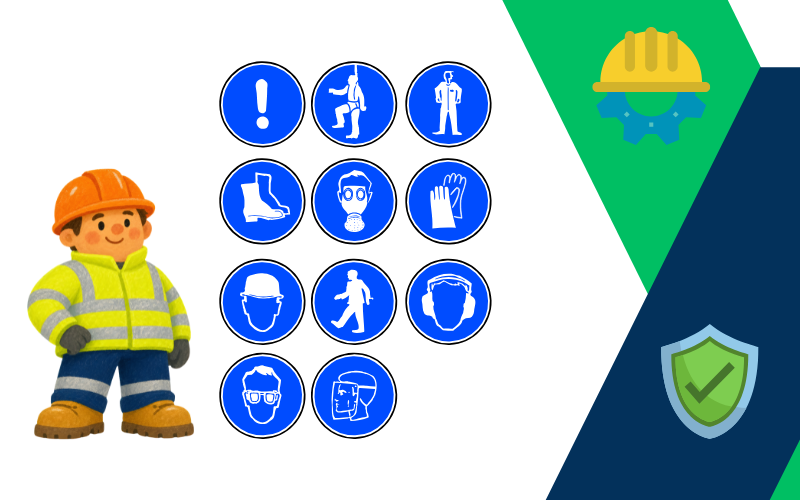
Importance of PPE in the oil and gas industry
There are many high-risk activities involved in oil and gas operations, including:
- Hot work and welding
- Confined space entry
- Chemical handling
- Lifting activities
- Working at height
- Mechanical maintenance
- Electrical maintenance
- Flammable and toxic environment
- Work at height
- Scaffolding
- Cleaning
In the above-mentioned tasks, each task presents a unique hazard, and wearing the correct PPE significantly reduces the risk of serious injuries in oil and gas. For more details on environmental hazards, see our guide on Heat Stress Safety in Gulf and Hand Safety, Line of Fire, and Dropped Objects.
Basic PPE in the Oil and Gas Industry
1: Safety Helmet
A safety helmet protects the head from falling tools, swinging loads, and accidental impact. A safety helmet is one of the most basic and mandatory PPE items required to enter any oil and gas site—even just for walking around.
Safety helmet standards must be compliant with those in the oil and gas or chemical industry in Gulf countries:
- BS EN 397 or ANSI Z89.1 Type 1, Classes E and G.
- Free from vent/hole/puncture/painting
- Helmet date of manufacture should not be more than 6 years old.
- No material inside the hard hat, like caps gloves/glasses under the hard hat.
- Ensure the ratchet is properly tight.
Color Coding for oil and gas industry in Gulf countries
Below are the colors used in the oil and gas industry to represent the different trade/craft people working in the industry:
- GREEN: Safety Officer
- White: Supervisor
- Red: Fire Department/fire watcher/confined space attendant
- Grey: Welder/fabricator
- Blue: Electrician
- Yellow: For all worker/labor of any craft
2: Safety Glasses
Safety glasses are another mandatory PPE. Safety glasses with side shields provide everyday eye protection from flying particles, dust, sparks, and chemical splashes that can cause permanent eye injuries.
Safety glasses standards must be complied with in the oil and gas or chemical industry in Gulf countries:
- BS EN 166 or ANSI Z 87
- No scratch
- Not over a monkey mask or any other face mask
- Tinted (silver, amber, mirror, or grey) not allowed in low-illumination areas, e.g., buildings, confined spaces, or at night.
Chemical Goggles
- BS EN 166 or ANSI Z 87
- Use chemical goggles when entering the area marked with an orange line and labeled goggles required
3: Flame Resistant (FR) Coveralls
Unlike ordinary workwear, FR coveralls are designed to reduce the risk of burn injuries by resisting ignition and limiting flame spread. FRC is mandatory PPE in the upstream and downstream oil and gas industry. Without an FRC coverall, no entry into facilities.
FRC standards must be complied with in the oil and gas or chemical industry in Gulf countries:
- NFPA 2112 or BS EN 11612
- Inherit/permanent fiber
- Treated FR fabrics are not allowed
- FRC labeled as per applicable standard
- Don’t use contaminated or damaged FRC
- FRC coveralls shall be fastened and zipped closed except for the top collar button
- FRC shirt shall be tucked inside FRC trousers
Color code and safe practices for the oil and gas industry in the Gulf
- Red: Safety Officer
- Yellow: Worker/labor
- Blue/Brown: Supervisor/In charge
As a safety practice, companies require the FRC to have the logo and name printed on it.
4: Safety Gloves
Oil and gas sites involve a wide range of activities — from mechanical work and open‑flame tasks to rigging, lifting, electrical jobs, chemical handling, and material movement. Different activities require different gloves; selecting the wrong type can leave workers exposed to cuts, burns, or chemical injuries.
Safety glove standards must be complied with in the oil and gas or chemical industry in Gulf countries:
Leather Gloves:
- EN 388 or EN 420
Cut Resistant Gloves:
- EN 388 (Cut level 5 or cut level D or E or F)
Hand Protection:
- Gloves shall always be carried by an employee when in a PPE-designated area.
- Don’t use contaminated, damaged, or oversized gloves.
5: Hearing Protection
Noise levels around compressors, generators, pressurized steam, and rotating equipment often exceed safe exposure limits. Earplugs and earmuffs help prevent long-term hearing loss.
Common Standard
- EN 352
Ear Plug:
- NRR equal to or greater than 28 dBA.
- Primary hearing protection
- Use clean earplugs
- Dispose after every use or after prolonged use
Earmuffs:
- NRR equal to or greater than 26 dBA
- Secondary hearing protection with earplugs when noise level is equal to or greater than 100 dBA
6: Safety Shoes
Safety shoes are among the most essential pieces of PPE in the oil and gas industry. These boots protect workers from falling objects, sharp materials, slips, and even electrical hazards. Oil and gas companies require steel-toe or composite-toe boots with anti-slip soles.
Safety shoe standards that must be complied with in the oil and gas or chemical industry in Gulf countries:
- BS EN 20345, S3, or ANSI Z41 PT 99 M I 75 C 75 PR or ASTM F2413
- High ankle
- Steel toe and slip-resistant sole
Safe practice for using PPE in the oil and gas industry
- Inspect before each use
- Do not modify/temper with PPE or misuse PPE
- Do not use dirty, modified, damaged, or defective PPE
- Contaminated PPE that cannot be decontaminated shall be disposed of
The right PPE is only effective when the worker knows how to wear, maintain, and use it for the right job.
Conclusion
PPE in the oil and gas industry plays a vital role in preventing workplace injuries. Choosing the right PPE is one of the simplest yet most effective ways to safeguard lives. In this article, we break down the essential PPE used in the industry and highlight the common standards followed by major Gulf companies, including Saudi Aramco, ADNOC, QatarEnergy, and QatarChemical.
Companies in the Gulf adopt the standards mentioned in this article as real‑world industry examples. This article will also help you prepare for an interview in the oil and gas industry on safety standards.
Follow us on LinkedIn